The Table Is the Door: How Queer Desi Dinners Built a Living Room Underground
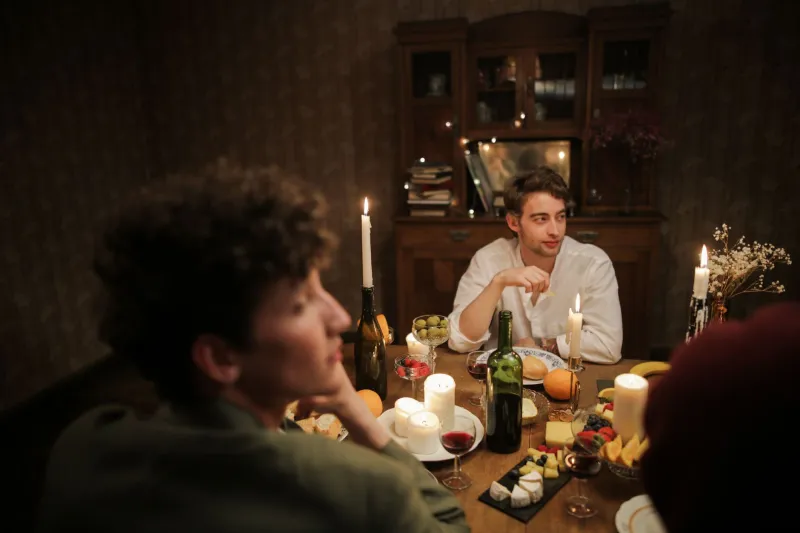
The bungalow off Hillcroft in Houston smells like cardamom and somebody's aunt's aggression. It is 10:40 p.m. on a Saturday, there are nineteen pairs of shoes by the door, and the host — a 33-year-old named Faraz who has been cooking since six — is yelling at a guest to stop apologizing for bringing store-bought naan. The phones went into a basket on the console table an hour ago. Nobody has taken a photo of anything.
“The first rule is that there is no content,” he says later, refilling chai. “If it's not on your phone, it can't be on your family's phone.”
This is what the underground looks like in 2026: not a club, not a float, not a branded party with a photographer and a drink minimum. A table. A door that gets locked once everyone's inside. A group of queer South Asians who found each other in the margins of group chats and dating apps and decided that the safest room they could build was a dining room.
Where the nightlife went
Ask around and the same story surfaces. The bar was never quite the point. In mainstream queer venues, the cameras are the problem — the tagged photo, the public post, the mutual friend who screenshots. For people whose families, workplaces, or immigration paperwork make visibility expensive, a strobe-lit room with an open Instagram policy is not freedom. It's exposure with a cover charge.
So the dinner party happened. Quietly, first in someone's apartment in Jackson Heights, then in a Devon Avenue kitchen in Chicago, then in a Seattle townhouse with too few chairs and a folding table from a hardware store. The format traveled the way most desi things travel: by word of mouth, one trusted person vouching for another.
The rules of the room
Hosts describe a shared etiquette that emerged without a committee. First names only, and nobody's last name goes in the group chat. Phone basket at the door, or at least a clear “no photos of people” rule enforced by the host. No tagging, no posting, no descriptions detailed enough to identify anyone. What's said at the table stays at the table, including who was there.
“I vet by vouching,” says Devi, 38, who runs a twelve-seat supper club in Chicago. “Two people I trust have to know you. Not because we're exclusive — because trust is the only security system we have. A room that's public is a room that can be walked into.”
That vetting is also how the rooms stay mixed. You get software engineers and home health aides, graduate students and people in their fifties who came out in a completely different decade, hijabis and people who left religion entirely, all at the same table because they share one friend in common.
A shared dish is a political statement
Every host interviewed for this piece talked about food before they talked about anything else, and every one of them had a system. Dishes get labeled — halal, vegetarian, jain, contains nuts, contains beef. Nobody polices anyone's plate. Someone always makes a rice, someone always brings something their mother made, and someone always tries to argue that their family's version of a regional classic is the correct one.
“I've watched two grown men have a very heated conversation about biryani at 1 a.m.,” says Nadia, 34, who hosts in Queens and has been called the aunty of her friend group with affection. “That's the whole thing. That's the point. We're not performing our culture for outsiders and we're not apologizing for it either. We're just eating.”
Alcohol is present and never required. The hosts keep a real non-alcoholic option on the table that isn't an afterthought, and the drinking pressure that defines most American nightlife simply doesn't exist here — a relief for anyone who's sober, and anyone who's simply tired.
Queens: folding chairs and forty people
Nadia's dinners started with six people and a pot of dal. In late 2025 they crossed forty, which broke the apartment and forced a second table in the hallway. Now she runs it as two smaller nights a month instead of one big one. “Big gets loud,” she says. “Loud gets careless.”
She keeps a physical guest list on paper. Not a spreadsheet, not a shared doc. Paper, because paper doesn't sync anywhere.
Houston: the table that outgrew the house
Faraz's dinners are the opposite problem: a suburban house with a yard and a projector, and a guest list that has doubled twice since the spring. He now splits nights by age band, roughly, so the twenty-two-year-olds and the fifty-year-olds don't spend the whole evening talking past each other — but he always keeps a couple of older guests at the younger table, because mentorship happens by proximity, not by panel.
Chicago and Seattle: small rooms, tight rules
Devi's twelve seats come with a waitlist and a house rule she repeats at the door: ask before you touch, ask before you flirt, and take the second no the first time. In Seattle, a host who asked to be identified only as J., 41, runs a rotating house salon in a Capitol Hill apartment where the after-dinner hour turns into what she calls “the part of the night you can't get anywhere else” — a floor full of people arguing about queer South Asian fiction, someone playing a ghazal at low volume, and a corner where a newly out 23-year-old is being gently interrogated about whether he's eating enough.
Consent, quietly enforced
The rooms enforce consent culture without a workshop. No interrogations about who tops. No asking someone's immigration status. No touching without asking, no pulling someone onto a dance floor, no treating a quiet guest as a project to be fixed. Hosts assign themselves or a friend as the person who checks in on anyone who looks cornered, and someone always walks a guest to their car.
“Consent isn't just sexual,” Devi says. “It's also: don't put me in your story. Don't tell your roommate who was here. Don't ask me how my mother is doing in front of a room if you don't know whether she knows.”
What chosen family actually costs
It costs. Hosting is unpaid labor — grocery runs, a sink that never empties, the anxiety of a guest list that could accidentally put someone at risk. Nadia has burned out twice and now runs her nights with a co-host. Faraz has a rule that he sits down for at least twenty minutes of his own party. Devi's dinner has a modest contribution jar that nobody is turned away for.
And the emotional ledger is real too. These rooms absorb breakups, visa panics, coming-out crises, and the phone calls people can't make to their actual families. Chosen family is not a cute phrase in this context. It's a shift schedule.
After midnight
The plates get cleared around 1 a.m. and the guest list quietly halves. Nobody announces the second phase. The playlist shifts from Arijit to something older to something with a beat. Someone is crying in the kitchen and someone is making them chai. Someone else is asleep on a couch and will be gently woken before the last people leave.
This is the underground nobody is going to write a travel guide about, and that is precisely the point. It exists in group chats with names like “Sunday things,” in paper guest lists, in a Houston bungalow with a basket of phones by the door.
If you find your way to one of these tables, bring a dish. Leave your last name at home. And don't take a photo of the people who made the night feel like home.