Where the Lights Go Low, We Belong: Inside the Queer Desi DJ Circuit Reshaping American Nights
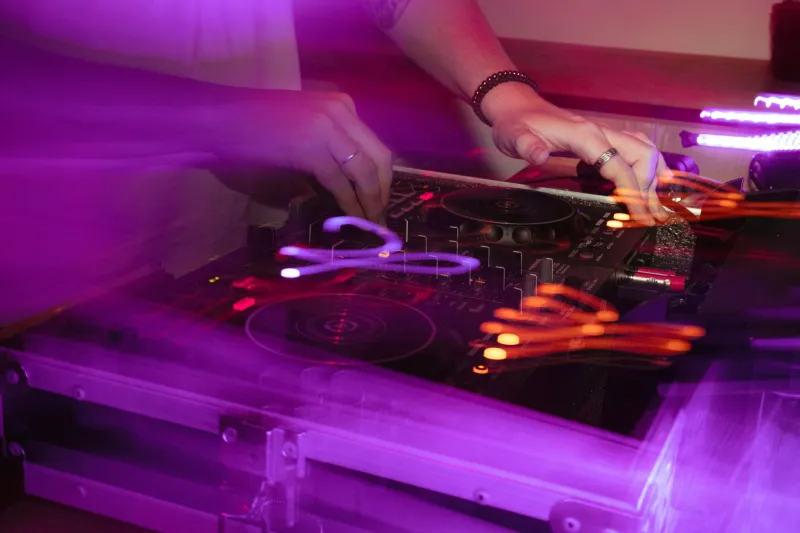
It's 1:47 a.m. on a Saturday in Brooklyn, and the line outside the unmarked door has the hush of a family secret. No one is shouting. No one is posting. A bouncer with a clipboard and a soft voice checks names against a text list, then waves each person through a hallway that smells like cardamom and dry ice. Downstairs, a DJ in a mesh top is mixing a Bollywood string sample into a Jersey club kick, and the room—maybe 120 people, mostly queer, mostly South Asian, all of them dressed like they have somewhere better to be—loses its mind.
This is not a club. It's a rented basement with a bad ceiling and a good soundsystem, and for the next four hours it is also a country.
The Guest List Is the First Song
Before the first beat drops, someone has already made a dozen decisions that determine whether the night feels like a sanctuary or a trap. Who gets the address. Who gets turned away. Who is allowed to bring a friend. Who is allowed to take a photo. The organizers behind the current queer Desi party circuit—Brooklyn to Houston, Chicago to Los Angeles, Atlanta to the Bay—will tell you that the door policy is not about exclusivity. It is about temperature. A room can hold only so much chaos before it stops being safe.
At a recent Houston party in a strip-mall back room, the organizer—a 34-year-old community worker who asked to go by A.—stood at the entrance with a tablet and a list of rules taped to the wall in three languages. No photos of other people. No touching without asking. No outside liquor. No weapons. No exceptions. The rules were not decorative. They were the difference between a night that felt like a living room and a night that felt like a risk.
'We are not trying to be cool,' A. said. 'We are trying to be careful.'
Bass as a Border
Inside, the DJs are doing more than playing songs. They are building a sonic border around the room. The set list moves from qawwali samples to Chicago house to amapiano to a remix of a Tamil film song that makes the crowd scream before the vocal even lands. The lighting is deliberately low and warm—no harsh strobes, no fluorescent wash, no mirrors angled like they are trying to catch you. The goal is not to make you look good for someone else. The goal is to make you forget, for a few hours, that anyone is looking at all.
DJs on this circuit talk about the craft of reading a room that has been trained to be hypervigilant. They watch the edges of the dance floor, not just the center. They notice when the crowd stops moving near the bar. They know that a banger can be a shield. They know that a slow song can be a confession.
In Los Angeles, a DJ who goes by N.—she spins a mix of desi bass, dembow, and old Bollywood cuts—says the most important tool is not the decks. It is the break. 'When I drop the music out and just let the room breathe, that's when I can see who is okay and who is not,' she said. 'The silence tells me more than the noise.'
Rent-a-Room, Build a Country
The economics of these parties are brutal and unglamorous. Rented basements, after-hours clubs, community centers, and back rooms in restaurants. Cash at the door. Donations from regulars. Organizers who work day jobs and spend their weekends troubleshooting sound systems and cleaning up. The margins are thin. The risk is high. In 2026, with anti-LGBTQ legislation moving through statehouses and immigration rhetoric running hot, the stakes feel higher than the cover charge.
But the temporary homeland is still worth building. In Chicago, a monthly party in a basement off Devon Avenue has become a meeting point for queer Desis who do not see themselves reflected in mainstream gay bars or in the desi community events that still treat queerness as a rumor. In Atlanta, a roving party has built a reputation for its careful inclusion of trans and nonbinary desis, with organizers actively checking their own door list for who might be getting left outside. In the Bay Area, a daytime tea dance has become a softer entry point for people who cannot do 3 a.m.
None of these spaces are utopias. There are still arguments about caste, colorism, body size, and who gets to be the face of the party. There are still organizers who mess up and crowds who forgive too easily. But the basement is a country because it is a place where the rules can be rewritten—not perfectly, not permanently, but for one night.
Why 2026 Feels Different
The apps are still there. The family group chats are still there. The fear of being seen in the wrong neighborhood, the wrong screenshot, the wrong locker room—it does not disappear when the bass drops. But the dance floor offers something the feed cannot: a room full of people who are choosing to be in the same place at the same time, under the same low light, with the same understanding that they are responsible for each other.
At 4 a.m., the lights come up. The DJ plays one last slow song, something old and aching. The crowd does not rush for the door. They stand there for a minute, blinking, sweaty, briefly unhoused. Then someone laughs. Someone else starts stacking cups. The basement becomes a basement again.
But for four hours, it was a country. And that is why they will do it again next month.